Suction dredging
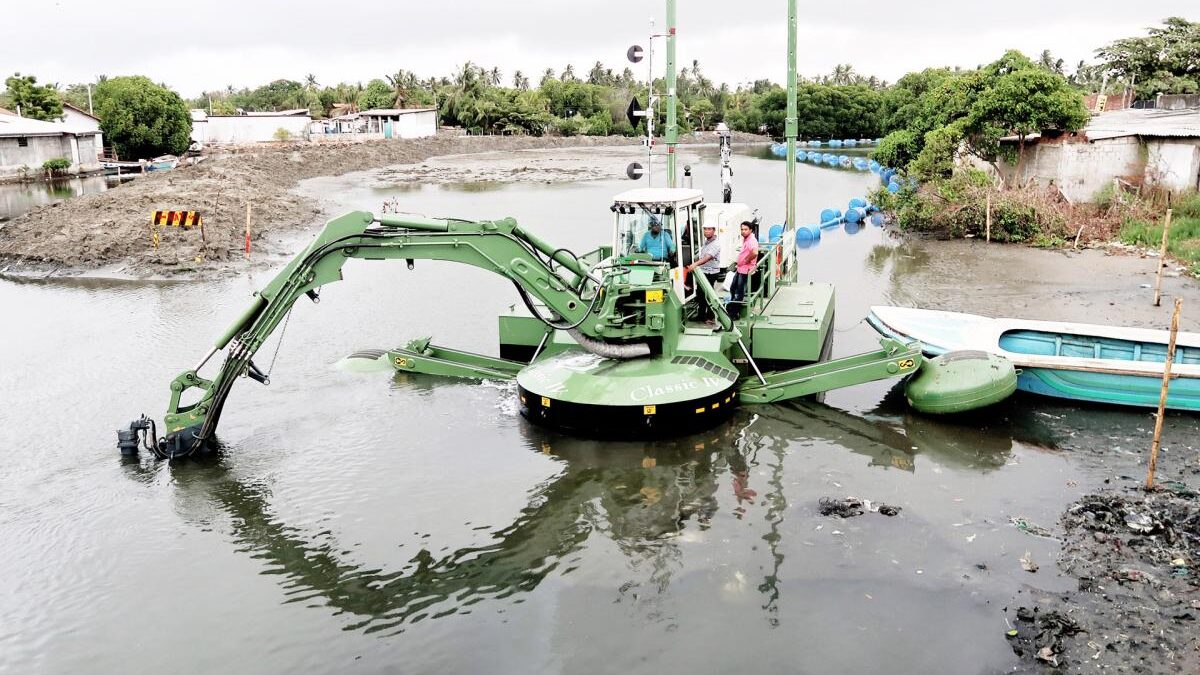
The patented submersible cutter pump dredges up to 1,180 yd³ of sludge per hour and discharges up to 1 mile away — further with a booster pump. It works even where trash and vegetation are present.
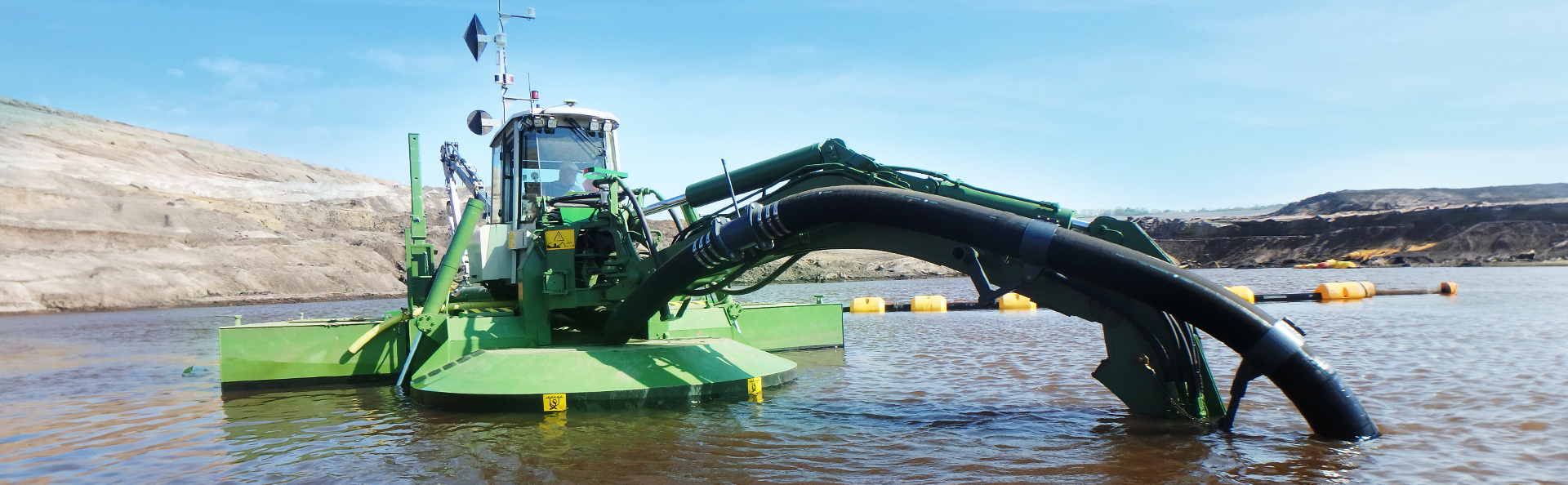
From dry ground to 20 ft depth. The all-in-one Watermaster is a cutter suction dredger, backhoe dredger, amphibious excavator, aquatic weed harvester, and piling machine in a single unit — mobilizing and operating without extra machinery or personnel.
Watch videoUnrestricted mobility and safe operation in challenging locations where no other machine can work.
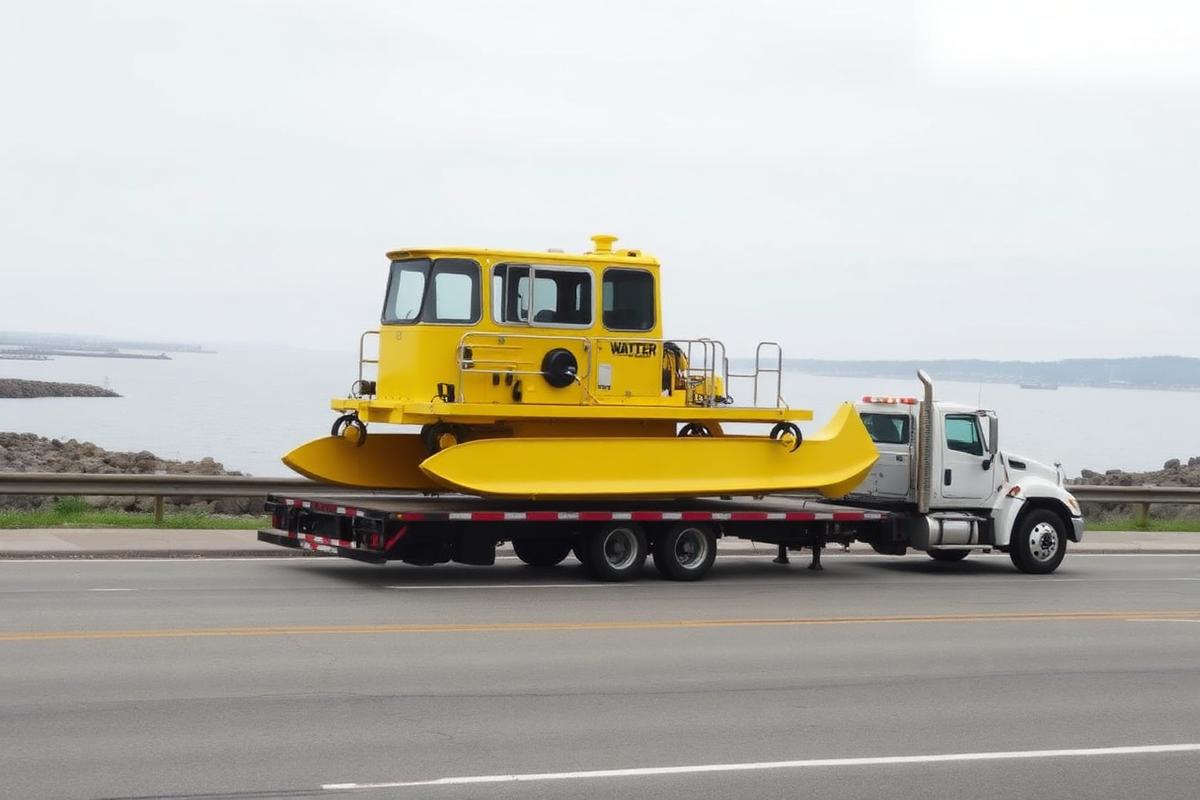
The compact Watermaster travels easily as a complete unit on a standard trailer.
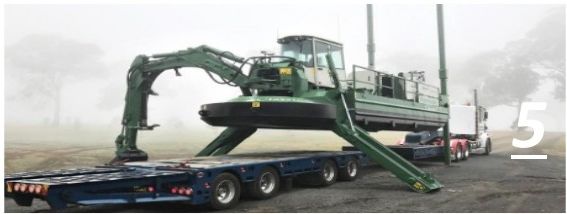
Unload autonomously using the four stabilizers and the excavator arm, then walk into the water without crane assistance.
Cruise to remote locations at speeds up to 4.6 mph — no tugboat needed.
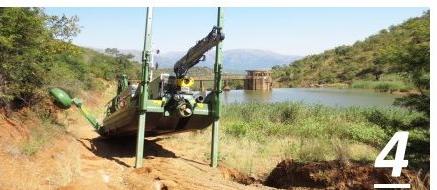
Anchor independently on four stabilizers for a steady work position, without cables that block water traffic.
Quickly interchangeable heavy-duty attachments let one machine handle every shallow water task.
The patented submersible cutter pump dredges up to 1,180 yd³ of sludge per hour and discharges up to 1 mile away — further with a booster pump. It works even where trash and vegetation are present.
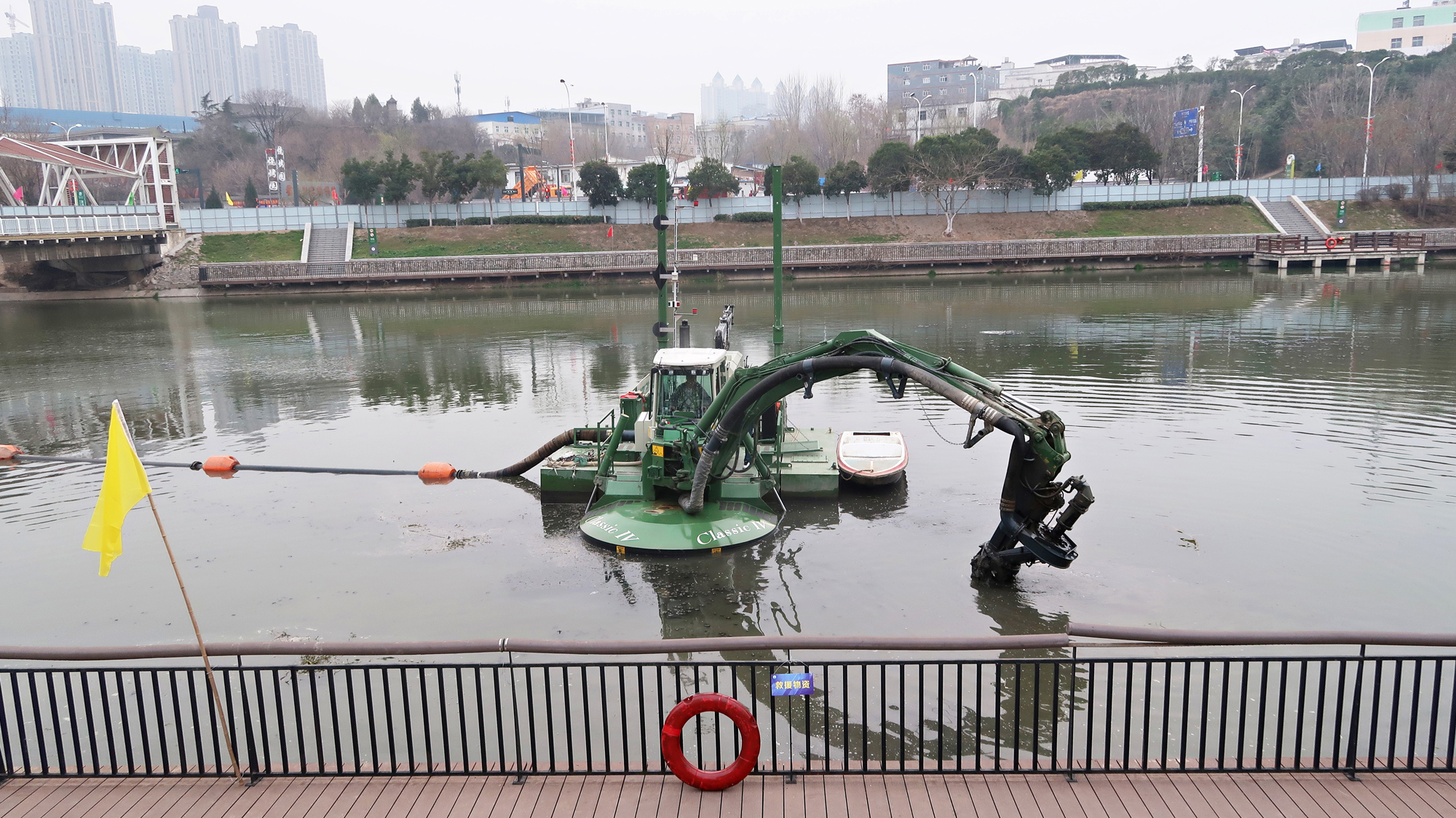
Choose a 160-gallon toothed bucket, a 265-gallon bucket for soft soils, or a clamshell. Handles roughly 52–78 yd³ of solids per hour depending on soil type.
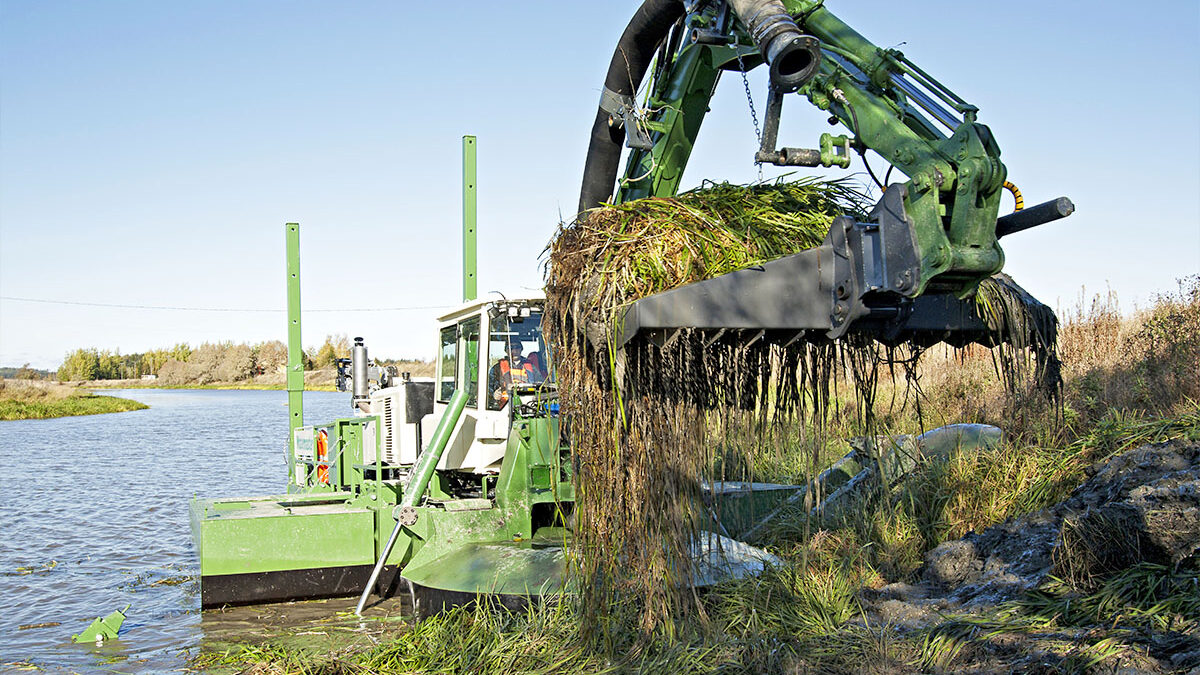
A 9 ft rake removes rooted invasive vegetation such as hippo grass, floating growth such as water hyacinth, and urban trash and debris.
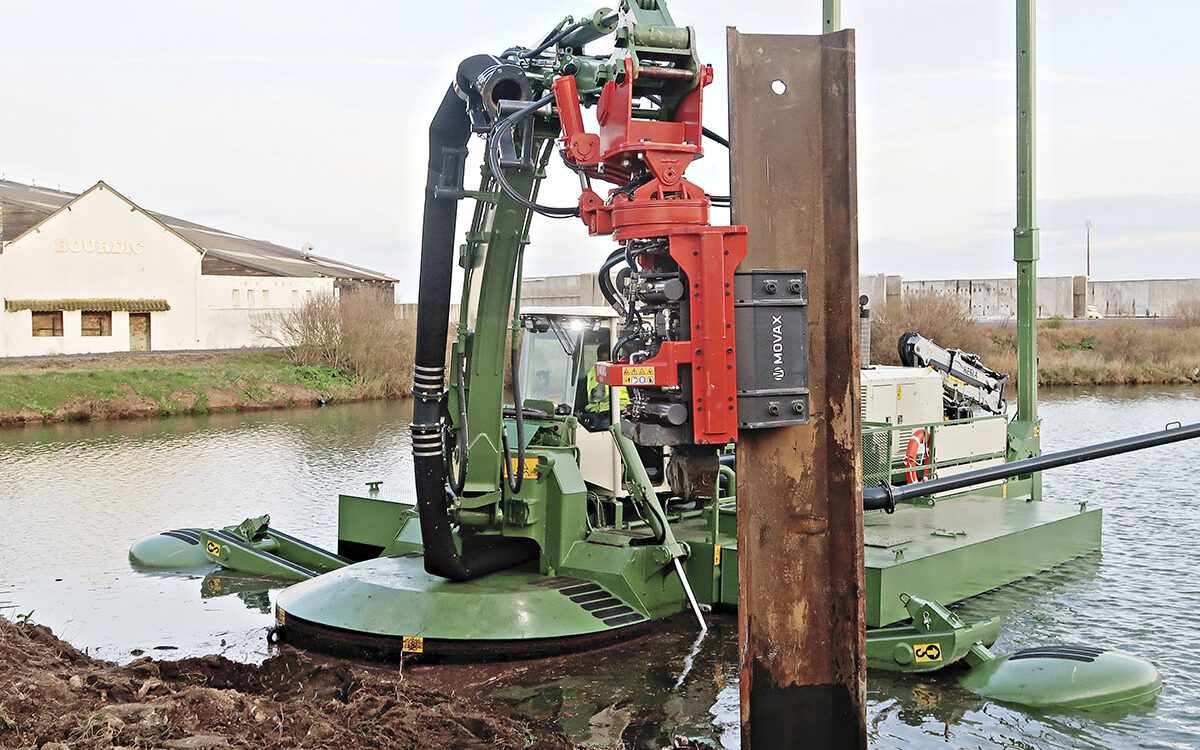
Drive piles from the water side with a piling bucket for wooden piles or a vibratory driver for piles and sheet metal. The FOPS-certified cabin keeps operators safe.
Amphibious dredging operations recorded for the Byram River flood mitigation alternatives analysis — a restoration-based approach that restores channel conveyance without modifying existing bridge structures.
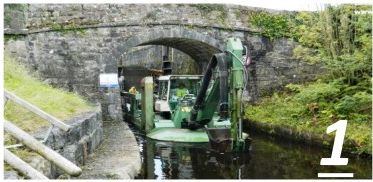 1
1The amphibious dredger operates inside a narrow channel under a stone bridge arch — clearing sediment at a constriction without touching or altering the historic structure.
 2
2The machine walks itself off the trailer and into the water on its own stabilizers and excavator arm, so no crane, barge, or in-water staging platform is required.
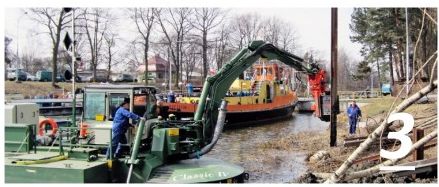
 3
3Set up directly beside a street-level river corridor. Work stays in the channel rather than on the roadway, keeping traffic, commerce, and emergency access moving.
 4
4Anchored on four stabilizers on a raw earth bank, the dredger reaches remote reservoirs and impoundments where conventional dredging plant cannot be launched.
 5
5The complete machine travels on a standard lowboy trailer, allowing rapid mobilization between sites within a watershed programme.
 6
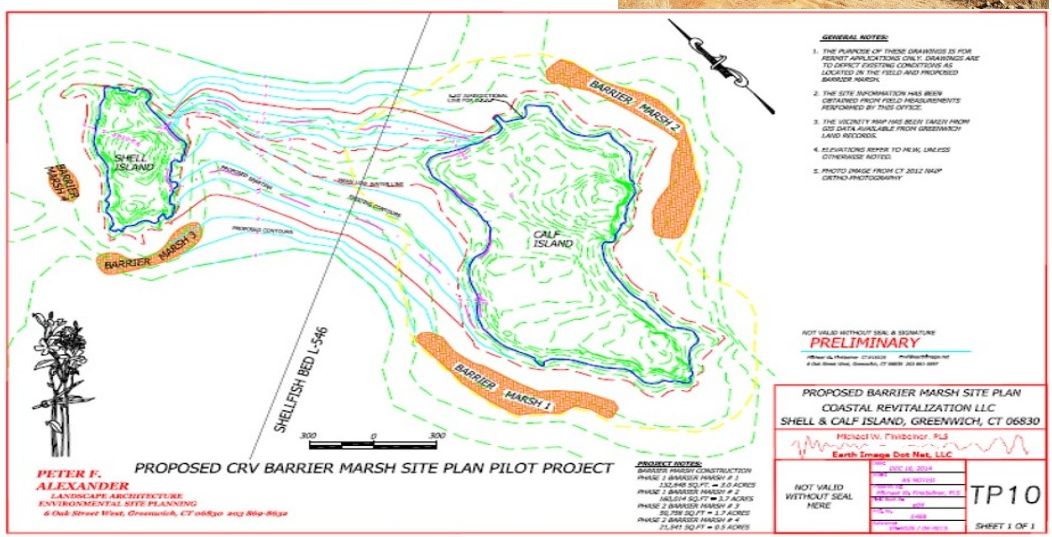
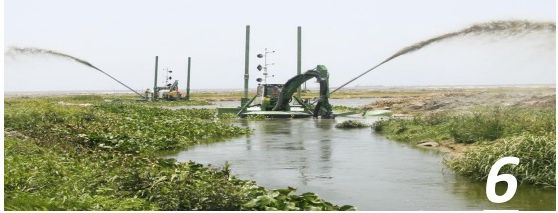
6Dredged material is pumped and sprayed into a receiving cell for salt marsh construction — turning sediment from a disposal burden into restored intertidal habitat.